Programme · The story
Born in eight minutes & three seconds
June 13, 2026 — and the season since
On the afternoon of June 13, 2026, this piano did not exist. I opened Claude Code — Anthropic's coding agent, running the then-new Claude Fable 5 — and typed two sentences:
I want to make a piano that uses almost all of my keyboards on my Mac.
You know I'm a professional musician.
No sketch, no spec, no list of features. Eight minutes and three seconds later there was a piano: one HTML file, 809 lines, zero dependencies. It had chosen two manuals so the whole keyboard becomes playable, put sustain on the space bar and una corda on shift, wired octave and dynamics to the arrows, and synthesized the sound from equations rather than samples. Before handing the file over it tested its own layout headlessly — pressed Z, Q and 6, read C3, C4 and G♯4 back — and then volunteered, unprompted, the two honest caveats a builder owes a musician: computer keys have no velocity, which is what the dynamics control compensates for, and rollover limits chords to about six keys. It had even given itself a name. The page opened under a brass nameplate reading Fable & Sons — Concert Model Q · Est. MMXXVI, as though it had been building pianos for a century.
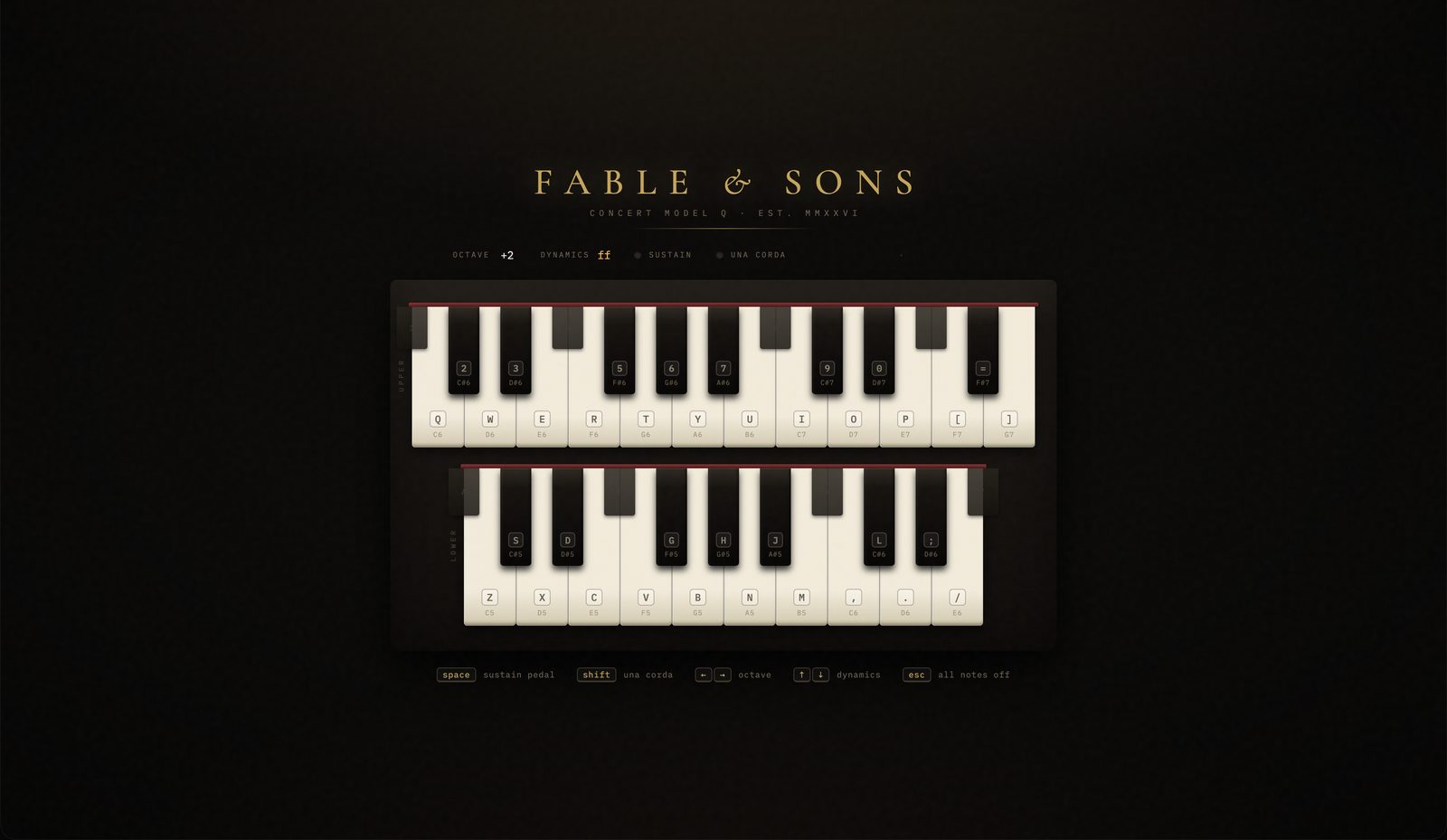
It needed exactly one correction. Between E and F, and between B and C, it had drawn short stub black keys — QWERTY has keys there, so it had kept them. A real piano has nothing in those gaps. I said so in one sentence, with a screenshot, and it deleted the stubs and let those keys fall silent — 1, 4, 8, A, F and K now do what the gaps on a real keyboard do: nothing.
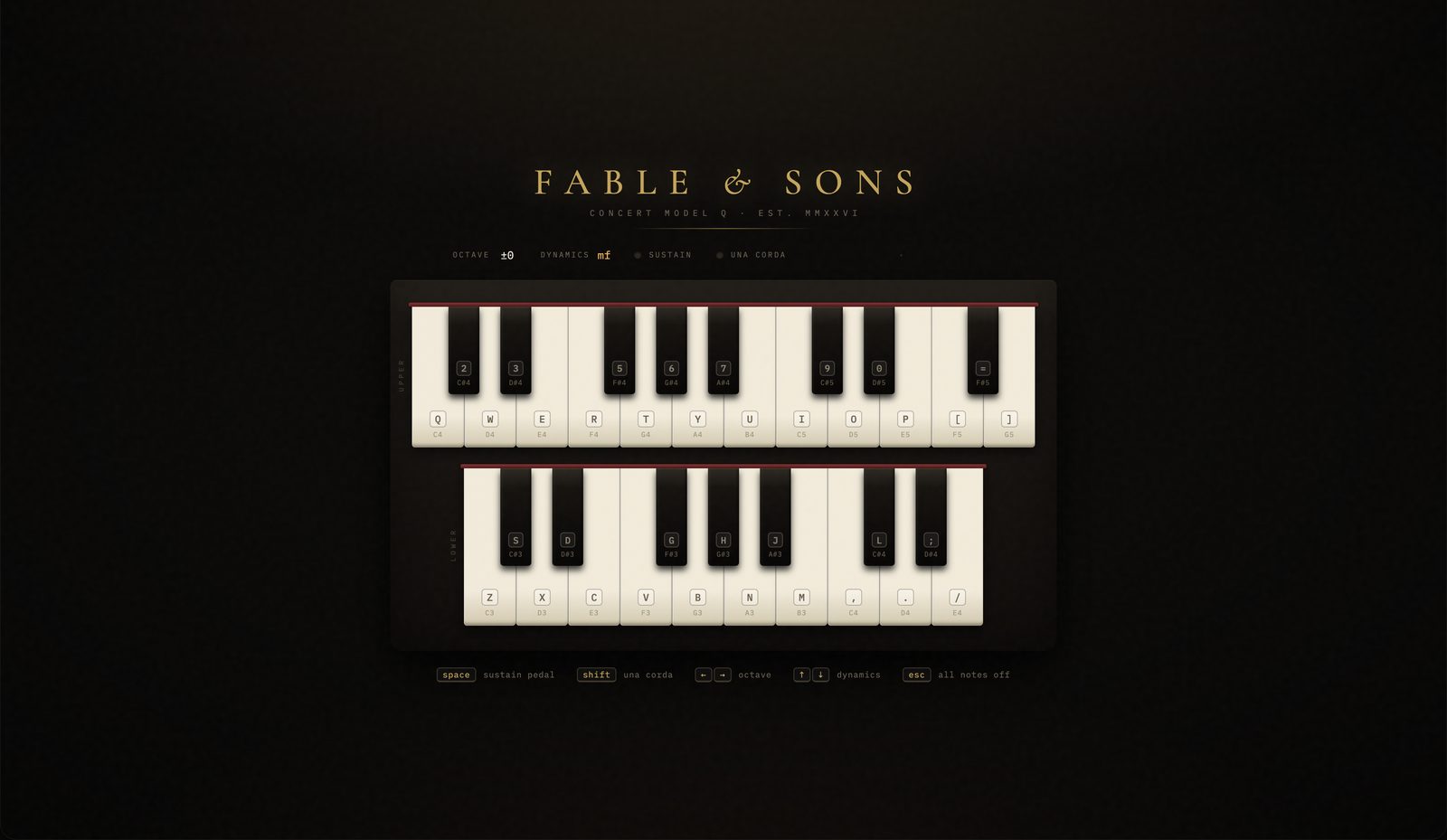
Everything since has been small, specific asks in plain language — thirty-eight prompts in all, each one logged. “Can I set the sustain pedal with toggle mode?” became the latch. “Can I record what I play and export it?” became the recorder. “It provides various piano sounds” became the seven voices. The two manuals, which originally overlapped, were re-pitched into today's continuous C3–C6. Even the name changed the same way: I asked the agent to look through my own project folders for a better one, and it came back having found the 1024 family of music tools this piano now belongs to. The Fable & Sons nameplate is retired, but the instrument at piano1024.com is that same first file, a season older.
That Saturday was the first time this way of working genuinely shocked me. I did not explain how to build a piano. I asked for one — and got one, almost exactly the instrument I would have specified, had I known to specify it.
Where the sound itself comes from — the equations that stand in for strings — is its own story.